
In this rapidly evolving world of ours, where technology, infrastructure, and security systems all converge as never before, fire-rated flexible cables are a given. This special-purpose cable that is designed to maintain circuit integrity even when fire breaks out is a matter of life and survival for critical installations. From office high-rises and transport terminals to hospitals and industry, fire-rated flexible cables are the core of modern-day protection systems.
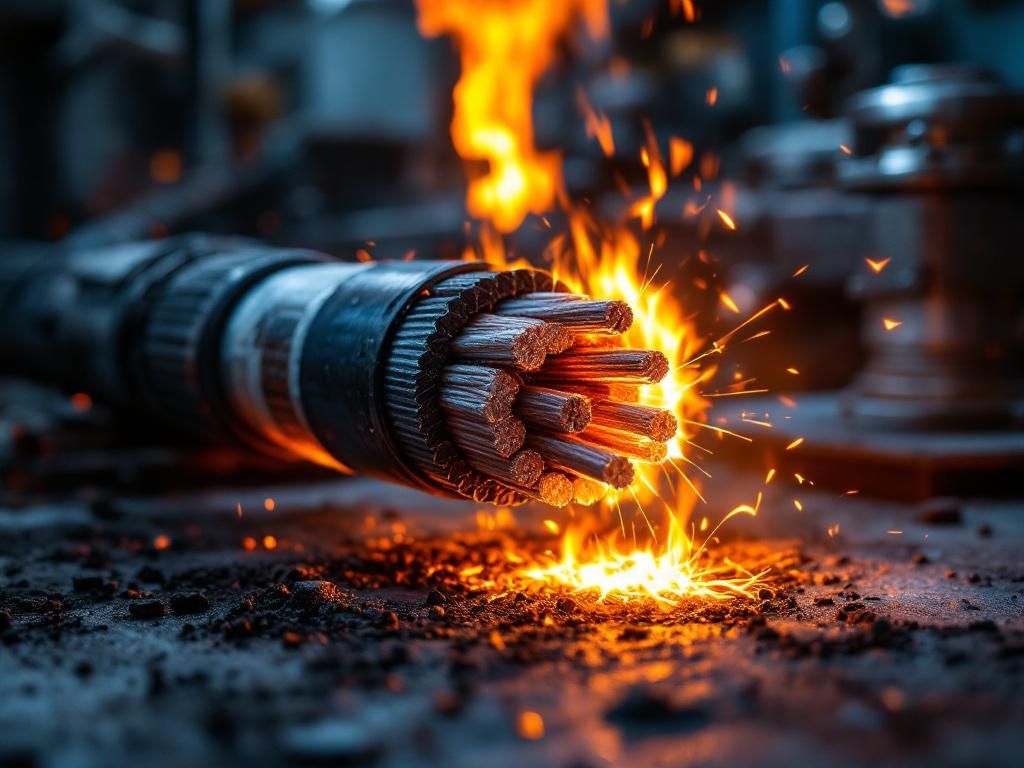
This article is about why Fire Rated Cable Manufacturer are important, to what standard they are certified, where they are installed, and how they are useful in their function of protecting people, property, and buildings.
Knowing Fire-Rated Flexible Cables
Fireproof flexible cables, also called "circuit integrity" or "fire survival" cables, are special electric cables that function in and even following fire exposure. Since regular cables fall prey to raging temperatures through melting or disintegrating within a matter of a few seconds, fire-rated cables are manufactured as a result of:
- Tolerate higher temperatures for a longer duration.
- Retain electrical conductivity even in the occurrence of fire.
- Emergency power supplies that are necessary to operate evacuations and fire control.
Another advantage is that of flexibility, as such cables could be installed much easier in complex building configurations as well as in retrofit applications.
Why Fire-Rated Cables are Needed
1. To Provide Life Safety
The number one justification of fire-rated cables is life safety. When a fire occurs, emergency lighting, fire detection and alarm systems, public address systems, smoke extract fans, and sprinkler pump services all require an uninterrupted supply of power. Fire-rated cables provide the assurance that such systems remain operable to buy precious time to allow occupants to evacuate as well as to bring in the firefighters.
Without a fire-rated cable, even the most effective fire detection or suppression system will fail within minutes, resulting in loss of life and destruction.
2. Complying with Contemporary Safety Standards
Global codes and building codes are now putting fire-rated cables into critical circuits more and more. Some of these codes include:
- IEC 60331 – Test methods of fire resistance of electric cables.
- BS 6387 – Prescribes performance requirements under fire, water, and mechanical endurance.
- NFPA codes – Globally and in the United States, universally adopted.
These codes exist because our past has repeatedly proven that older wiring systems have not lasted long enough in a burning environment to preserve life and property. Fire-resistant cables are not a choice; they are a law and an ethical mandate.
3. Securing Strategic Infrastructure
Current construction is dependent upon continuous power and communications. Imagine a hospital surgery room losing power to life support during a fire or a data centre losing connectivity that results in malfunctioning emergency communications systems. Fire-rated flexible cables prevent such catastrophic failure by providing an ongoing supply of necessary operation.
4. Ability to Meet Contemporary Construction Demand
Today's buildings are higher and more complicated and feature sophisticated systems that need cabling to navigate complicated plans. Fire-rated flexible cables, rather than stiff cables, can be easily bent, routed, and fitted into confused or multi-level areas without compromising performance. This kind of flexibility makes them extremely appropriate for smart buildings, retrofits, and extremely large industrial projects.
Application of Fire-Rated Flexible Cables
Fire-rated flexible cables are deployed in an array of mission-critical applications such as:
- Emergency Lighting Systems – Evacuation visibility lighting.
- Fire Alarm and Detection Systems – Supplying power to control panels and sensors to assist in fire monitoring.
- Public Address and Voice Evacuation Systems – Preserving communication links to direct occupants.
- Smoke Extraction and Ventilation Systems – Controlling particulate dissemination and supplying respirable air.
- Sprinkler and Hydrant Pumps – Centrifugal-powered water supply systems used during firefighting.
- Hospitals and Healthcare Facilities – Enabling life-critical medical devices.
- Airports, Metro stations, and Tunnels – Facilitating safety systems in high-population buildings.
Standards Regulating Fire-Rated Flexible Cables
Fire performance of flexible cables is confirmed against rigorous test methods. Some of the most important tests are:
- Fire Resistance Test (IEC 60331): This is used to determine whether it is possible to keep circuits active if cables are subjected to fire for a predetermined time interval.
- Circuit Integrity when Subject to Fire with Water Spray (BS 6387, category W): Maintains cables' functioning when confronted by fire and water spray at once.
- Mechanical Shock Test (BS 6387, class Z): Tests performance against mechanical shock, which is a simulation of dropped debris.
- Smoke Density and Toxicity Tests (IEC 61034, IEC 60754): Tests that cables will give a minimum of smoke and non-toxic halogen gas upon burning and therefore reduce suffocation risk.
These tests make sure fire-rated flexible cables are trustworthy even in demanding situations.
Provisions of Fire-Rated Flexible Cables
1. Safer Riding
They preserve human life by sustaining critical safety systems when emergencies happen.
2. Compliance with Laws
Use of fire-rated cables assures that buildings will be in accordance with international building and safety legislation to avoid prosecution.
3. Minimized Property Loss
These cables, through powering of suppression and extraction systems, limit the spread of fire and smoke, and consequently the losses.
4. Business Continuity
Data centres, hospitals, or subway stations are such mission-critical deployments that must keep running without interruption. Fire-rated cables eliminate downtime even when a fire breaks out.
5. Easy Installation and Flexibility
Ease of bending, routability, and handling during installation saves time and labour.
6. Benefits of Low Smoke, Zero Halogen (LSZH)
The majority of flexible fire-resistant cables are LSZH, i.e., they emit a minimal amount of smoke and no corrosive gas when on fire, which is crucial to the safety of evacuation as well as equipment protection.
Conclusion
Flexible fire-resistant cables are far more than they appear to be: electrical gear, lifelines and protectors of infrastructure during life-and-death fire situations. By maintaining life-sustaining systems operable in the event of a fire, they allow invaluable time for evacuation, assist in firefighting missions, and preserve priceless assets. In the light of contemporary safety norms, these cables are not only desired but are today an indispensable necessity for safe infrastructure development and building.
Be it in healthcare centres or commercial buildings, transport infrastructure or industry units, fire-rated flexible cables are that silent but strong wave that provides safety and dependability to our lives. As we proceed to build wiser and more intelligent buildings, fire-rated flexible cables will play a more important role only as development will never be a compromise to safety.
Also Read: Top Benefits of Using Copper Electric Cables in Residential and Industrial Wiring